Japan's Security Policy Shift: A New Era of Military Posture
5/7/20265 min read
Historical Context of Japan's Pacifism
Japan's commitment to a pacifist stance emerged as a significant consequence of its experience in World War II. After the devastating conflicts that culminated in 1945, Japan adopted a new constitution in 1947 under the auspices of General Douglas MacArthur's Allied occupation. Article 9 of this constitution explicitly renounced the right to wage war and forbade the maintenance of military forces for aggressive purposes. This decision not only reflected the nation’s aspirations for peace but also set a foundation for its post-war security policy.
The implications of this constitutional provision have been profound, affecting Japan's military policy and its international relations. For decades, Japan has maintained a Self-Defense Force, which operates under the strict limitations outlined in the constitution. This force is fundamentally defensive, focused on protecting the nation's territory and sovereignty rather than projecting military power abroad. Additionally, Japan’s reliance on the United States for security guarantees under the mutual defense treaty showcased its strategic alignment during the Cold War, as it aimed to balance its pacifist identity with the geopolitical realities of regional tensions.
Historically, major events such as the Korean War and the Vietnam War compelled Japan to recalibrate its security posture while still adhering to its pacifist principles. The emergence of regional threats, particularly from North Korea and the evolving dynamics with China, sparked ongoing debates within Japan regarding the necessity of expanding its military capabilities while remaining true to its commitment to pacifism.
As a result, Japan's pacifist approach has shaped its diplomatic posture and international relations profoundly. This historical context reveals how Japan navigated the complexities of its security needs and the guiding principles of peace, presenting an intricate picture of a nation striving to maintain its identity amid a changing global landscape.
Current Regional Tensions and Their Impact
In recent years, East Asia has become a focal point of rising regional tensions, primarily influenced by North Korea's continued missile tests and the assertive military actions of China. The Democratic People's Republic of Korea (DPRK) has demonstrated an increasingly aggressive stance, launching a series of ballistic missiles that challenge regional stability. This provocative behavior not only raises concerns about the potential for conflict but also highlights the vulnerabilities faced by neighboring countries, including Japan.
Concurrently, China has been active in asserting its territorial claims in the South China Sea and around Taiwan, further intensifying fears among regional actors. This action can be perceived as an attempt to expand its influence, raising alarms about the potential ramifications for Japan’s national security. For Japan, which has a pacifist constitution—a legacy of World War II—these developments present a significant challenge, necessitating a reassessment of its long-standing security policies.
The geopolitical dynamics in East Asia have compelled Japan to bolster its defense capabilities and reevaluate its strategic alliances, particularly with the United States. In the face of these evolving threats, Japan has sought to reinforce its military posture, moving towards a more proactive defense strategy. This shift has led to deeper collaboration with U.S. forces, enhancing joint military exercises and defense technology sharing, thereby ensuring that both nations are better prepared to address potential crises.
Furthermore, as Japan navigates these turbulent waters, its partnerships with other regional allies, such as Australia and India, have gained importance. These alliances are vital in establishing a united front against common threats, contributing to a collaborative security architecture in the Indo-Pacific region. In this context, Japan's evolving security policy signals a significant departure from its traditional pacifist approach and underscores the imperative to adapt to a rapidly changing security environment.
Key Policy Changes and Strategic Initiatives
In recent years, Japan has undergone significant policy shifts that mark a departure from its traditionally pacifist defense stance. The evolving security landscape, particularly in response to North Korean threats and China's military expansion, has necessitated a reevaluation of Japan's military posture. This reevaluation is evident in various legislative measures aimed at strengthening national defense.
One of the landmark changes is the enactment of the security legislation in 2015, which allows Japan to engage in collective self-defense. This legislation provides a legal framework for Japan to assist allies in situations where Japan’s security is threatened, thus enabling participation in international military operations alongside partners such as the United States. The proactive defense posture reflects a strategic pivot to address contemporary security challenges.
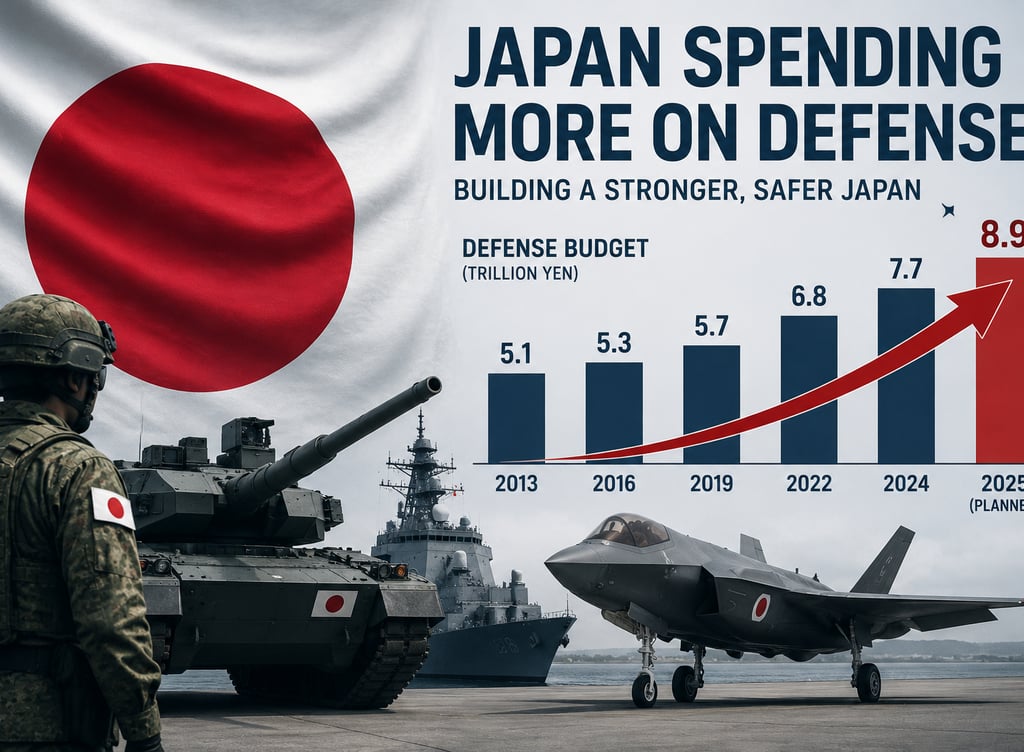
Additionally, Japan has substantially increased its defense budget, setting a precedent for sustained military expenditure growth. This commitment signifies the prioritization of modernizing Japan's Self-Defense Forces (SDF) and enhancing its capabilities. New acquisitions include advanced missile defense systems, next-generation fighter jets, and surveillance technologies that aim to bolster deterrent measures against regional threats.
Japan is also actively participating in multinational security arrangements, showcasing its commitment to global stability. Recent missions involving peacekeeping operations in South Sudan and humanitarian assistance further illustrate Japan's willingness to take on a more active role in international security. Such initiatives not only enhance Japan’s military readiness but also align with broader efforts to contribute constructively to regional peace.
These policy changes and strategic initiatives highlight a significant shift in Japan's security framework, moving from a strictly defensive posture towards a more proactive and integrated defense strategy. This transformation is essential to navigate the complexities of current geopolitical dynamics and ensure Japan's national security in an increasingly uncertain world.
Future Implications for Japan and International Relations
Japan's recent shift towards a more assertive military posture marks a significant transformation in its national security policy. This change will undoubtedly have long-term implications for both domestic and international politics. In particular, Japan’s move to bolster its defense capabilities may lead to intensified regional security dynamics in East Asia, a region characterized by historical tensions and ongoing territorial disputes. Such a shift may be interpreted by neighboring countries like China and North Korea as a provocative maneuver, prompting adjustments in their military strategies and potentially igniting an arms race.
Moreover, Japan's evolving role within regional security architectures, including its partnership with the United States and relationships with ASEAN countries, is likely to become more pronounced. By enhancing its military readiness and participating in joint military exercises, Japan could play a crucial role in countering perceived threats, particularly from North Korea’s ballistic missile program and China’s assertive territorial claims in the South China Sea.
This policy shift also invites scrutiny regarding Japan's historical pacifism and its implications for global peace and stability. Rising nationalism within Japan could foster a more militaristic ethos, while simultaneously raising concerns for countries that suffered from Japan's imperial past. The challenge lies in striking a balance between national security interests and the maintenance of constructive international relations.
As Japan navigates this new military landscape, it must reassess its diplomatic strategies and engage in dialogue with regional partners. Ultimately, Japan's actions will reverberate beyond its borders, influencing not just regional stability but also the larger framework of global security. A careful, measured approach is essential for Japan to foster a secure environment and promote peace on an international scale.